
If you’re a Las Vegas or Henderson homeowner, you know that summer electric bills can skyrocket thanks to relentless heat and constant AC use. Many homeowners wonder how much solar power they need and turn to online calculators, but most of these tools rely on national averages that don’t reflect the desert reality. Factors like extreme temperatures, high solar panel wattage losses in July, dust accumulation (common in new developments like Skye Canyon or Cadence), and roof orientation all affect the number of solar panels your home actually needs.
The typical “rule of thumb” suggests 15–25 solar panels for an average home—but in Las Vegas, your AC usage alone can shift that number significantly. Installing too few solar panels means you’ll still see high bills, while too many increases your solar panels’ cost unnecessarily.
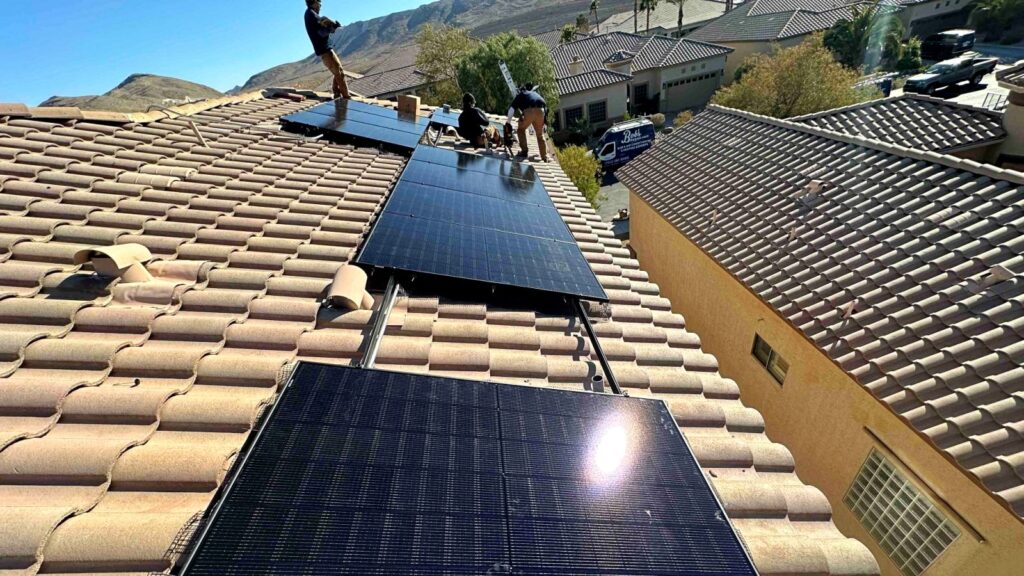
At Bob’s Repair Solar, we help homeowners design solar systems that match their energy consumption and roof space. We account for local conditions like peak sun hours, efficiency losses due to heat, and NV Energy net metering rules, so your system produces the solar power your home truly needs.
The 3 Main Factors Determining Your System Size
Your Annual kWh Usage (Not Just Square Footage)
The first step in determining how many solar panels your home needs is understanding your annual electricity usage. In Las Vegas, summer AC use can cause a dramatic spike in your electric bill, often making July the most expensive month of the year. According to the U.S. Energy Information Administration, Nevada households pay approximately 12.57 cents per kWh for residential electricity as of August 2025.
To calculate your system size, check your NV Energy bill for total kilowatt hours (kWh) used each month. For example, a 2,500 sq ft home may use 1,200–1,800 kWh in July alone. This figure is critical—it tells you how much solar power your solar panel array must produce to cover your energy consumption.
The “Desert Factor” (Peak Sun Hours vs. Heat Loss)
Vegas gets about 6–7 peak sun hours daily, which is excellent for solar power production. However, extreme heat—often above 115°F—can lower solar panel efficiency and reduce power output. Dust and debris also impact energy production, especially if your roof space isn’t cleaned regularly.
To ensure your system keeps up with your electricity consumption, we recommend sizing up your solar panels by at least 10% to account for heat, dust, and efficiency losses. Using higher efficiency panels can also help maximize production during peak summer months.
Your Future Plans
Are you planning to install solar panels for an electric vehicle, a pool pump, or a second AC unit? These additions increase your home’s energy needs and affect the number of solar panels needed.
Planning for future upgrades ensures your solar system isn’t undersized, helping you avoid higher electric bills and extra solar installation costs later. If you’re considering expanding your system later on, learning about modular solar panels for your home can also make it easier to add more capacity as your energy needs grow.
Calculating Your Needs: A Simple Formula
A straightforward way to estimate how much solar power you need for your Las Vegas home is to use this simplified formula:
System Size (kW) = Annual Electricity Usage (kWh) ÷ (Peak Sun Hours × 365 × Production Ratio)
Las Vegas Adjustment Tip: Because extreme heat and dust can reduce solar panel efficiency, always size up your system by at least 10%. This ensures your solar panel array produces enough energy to cover your electricity consumption even during the hottest months.
Example: A home with 12,000 kWh annual electricity usage and 6 peak sun hours/day would require roughly 5.5 kW, but sizing up to 6–6.5 kW is safer for Las Vegas conditions.
Solar Panel Sizing by Home Size (Las Vegas Estimates)
Here’s a Las Vegas-specific guideline showing typical system sizes based on home square footage and AC-heavy summer usage. Numbers assume standard residential solar panels with 350–400W panel wattage each:
| Home Size | Typical Annual Electricity Usage | Recommended System Size |
|---|---|---|
| 1,500 sq ft | 6,000–8,000 kWh | 4–6 kW |
| 2,500 sq ft | 10,000–12,000 kWh | 8–10 kW |
| 3,500+ sq ft | 14,000+ kWh | 12+ kW |
These estimates account for how much roof space, electricity consumption, and energy usage spikes from multiple AC units, pools, or future electric vehicle charging. Properly sizing your solar system ensures you avoid overspending on solar panels or installing fewer solar panels than your entire house needs.
Why Net Metering Affects How Many Panels You Buy
NV Energy’s net metering program allows your solar panel array to store excess electricity generated during the day and apply it toward nighttime use. This means when sizing your system, you don’t just need enough solar power for daytime consumption, you need a system that can produce more solar panels than your daily usage to build credits for cloudy days or nighttime energy consumption.
Properly sizing your number of solar panels ensures your electricity usage is fully covered, maximizing energy efficiency and cost savings. Understanding how net metering interacts with a complete solar panel system in Las Vegas can also help you decide whether to size your system slightly above your current usage.
The Danger of Undersizing (and Oversizing)

Undersizing
Installing fewer solar panels than your home needs can leave you paying high electricity bills, especially during peak summer months when your home requires much more energy to stay cool. A system that’s too small won’t generate enough electricity to match your annual usage, which limits your energy independence and reduces the benefits of switching to renewable energy.
This often happens when homeowners rely on square footage alone instead of reviewing how much energy their home actually uses in kilowatt hours.
Oversizing
Installing more solar panels than necessary can also work against you. While it may seem like producing extra energy is always beneficial, NV Energy and other utility companies typically credit excess power at reduced buy-back rates.
This means you’re paying higher solar costs upfront without receiving equal long-term savings. Oversized systems also take up more roof space, which may not always be available depending on how many square feet of usable area your roof provides or how much average sunlight each section receives.
Optimizing your solar panel array ensures your system size aligns with your true electricity consumption, local production ratio, and long-term goals. A properly designed system gives you maximum savings while avoiding unnecessary costs, and it can even be planned to support future upgrades like battery storage if you want additional energy security later on.
Don’t Guess. Get a Custom Design
A solar system isn’t one-size-fits-all. Our Las Vegas-specific solar panel installation ensures you get the right number of solar panels needed for your home, factoring in roof size, AC load, and future upgrades like solar batteries or an electric vehicle. Every custom solar estimate now comes with a free HVAC tune-up, making it easier to plan your system with confidence.
Call Bob’s Repair Solar at (702) 720-2466 for a free, no-obligation solar analysis and find out exactly how many solar panels you need to power your home efficiently.

