
Ever looked up at the sun and wondered how you could turn that powerful light into electricity for your home? The process is simpler than you might think.
Below is a diagram that illustrates the process of how solar panels work to convert sunlight into usable electricity for a home. The diagram highlights a typical grid-tied system, showing a simple, step-by-step flow from sunlight to power and the path electricity takes—from panels on the roof to outlets in your home.
How Solar Panels Work: 5-Step Process
Panels Absorb Sunlight
Solar panels on your roof capture sunlight. Each panel contains photovoltaic cells that create DC electricity through the photovoltaic effect.
Electricity Flows to Inverter
DC electricity travels from your panels to an inverter device. This can be a central inverter or microinverters attached to each panel.
Inverter Converts DC to AC
The inverter converts DC electricity into AC electricity that’s compatible with your home’s electrical system and appliances.
AC Power Feeds Your Home
Clean AC power flows to your home’s electrical panel. Your home uses this solar electricity first, significantly lowering your utility bills.
Excess Power to Grid
Extra electricity is sent back to the utility grid. Through net metering, you receive credits that offset nighttime or cloudy day usage.
The Science in a Nutshell: The Photovoltaic Effect in the Solar System
At the heart of every solar energy system is a simple, yet incredible, scientific principle called the photovoltaic effect.
So, how does solar energy work? The US Department of Energy explains that when particles of sunlight, called photons, strike the solar cells in a solar panel, they ‘knock’ electrons loose from their atoms. This movement of electrons creates a direct current (DC) of electricity. The PV cell is a specially treated semiconductor material, typically silicon, that is designed with a negative and positive charge to capture these photons and create an electrical current. This is also known as the photoelectric effect.
This process enables solar panels to generate electricity directly from the sun, without any moving parts. It’s the core technology that makes solar power a clean and highly efficient energy source, and it’s used across the three main types of solar panels available today.
How a Solar Panel System Works: A Clear Guide
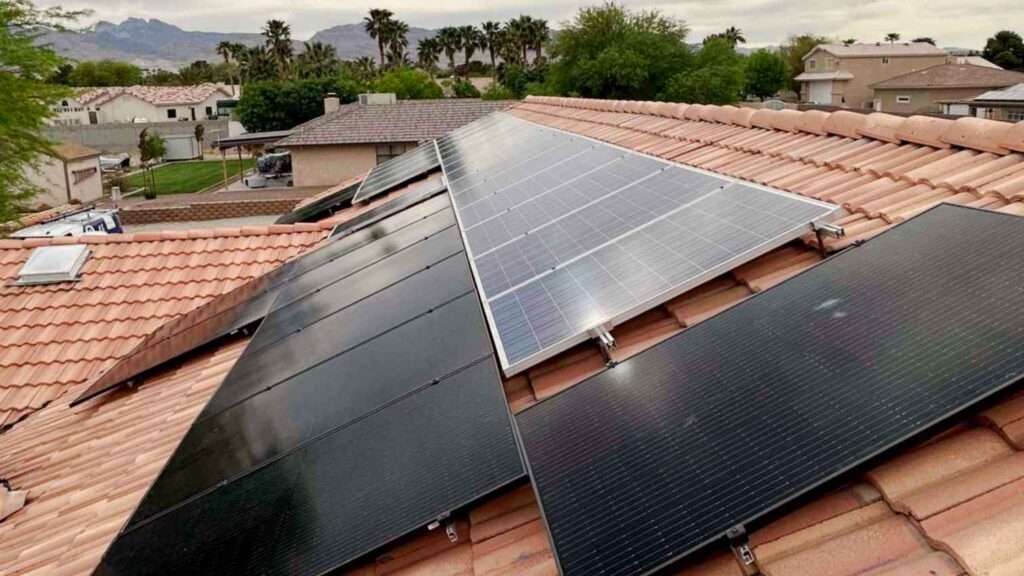
A residential solar system creates a seamless flow of energy for your home. The process begins on your roof, where photovoltaic cells in the solar panels convert sunlight directly into DC electricity. This power is then sent to an inverter, a critical device that transforms it into the AC electricity your appliances use. From there, the AC power flows to your electrical panel, powering your home before you draw from the utility. Any excess energy you produce is automatically sent back to the grid for a bill credit through a system called net metering.
Solar energy is a clean and renewable source that can reduce reliance on fossil fuels and lower carbon emissions, which have significant health benefits for entire communities. And while some people wonder whether solar panels are bad for your health, the evidence shows that solar energy is safe and contributes positively to both individual well-being and the environment.
What Happens at Night or on Cloudy Days?
The beauty of a grid-tied solar energy system is that you are never without power. When your panels aren’t producing enough electricity—whether it’s at night, on a particularly cloudy day, or during a storm—your home will seamlessly and automatically draw power from the utility grid, just as it always has. If you have a battery storage system, your home will first use the power stored in the battery before pulling from the grid.
PV System Components & Maintenance
Beyond the panels and inverter, a complete solar PV system can include a charge controller (especially for systems with battery storage), mounting racks, and wiring. The charge controller functionality ensures that batteries are charged safely without overcharging.
Maintaining your solar panels is surprisingly simple. For most systems, a good rain will wash away most dirt and debris. However, a quick cleaning a couple of times a year can ensure your panels are always performing at their best.
For homeowners in places like Pahrump, NV, Mesquite, NV, and Inspirada, NV, the abundance of sunlight makes solar a smart investment that provides true energy independence from fluctuating energy prices, while also being part of the broader shift toward alternative and renewable energy.
Now that you understand the simple and reliable process of solar power, the next step is to find out how it can work for your home. Contact Bob’s Repair for a free, no-obligation solar consultation and a personalized savings estimate.

