
Nevada’s brilliant sunshine offers a golden opportunity for homeowners to embrace renewable energy and achieve significant cost savings through solar panel installations. If you’re considering going solar in the Silver State, you’re likely wondering about Nevada solar incentives. This solar energy investment guide will show you.
This 2025 updated guide will show you that while some avenues, like direct state tax credits for panels, aren’t available, a potent combination of federal support and key NV Energy programs makes investing in a solar energy system a very smart financial decision for many Nevadans.
Current Solar Landscape in Nevada
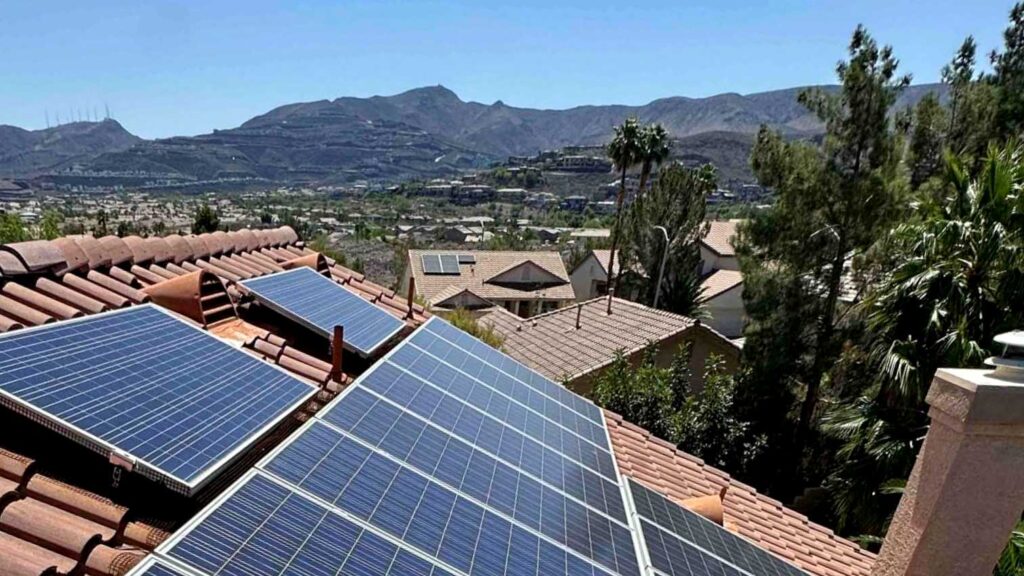
Nevada’s abundant sunshine makes solar panels exceptionally productive, positioning residential solar systems as a smart investment for significant cost savings and greater energy independence. The state’s well-established solar industry offers numerous experienced solar installers to help homeowners and commercial property owners transition to clean energy.
Beyond the clear environmental benefits of renewable energy, solar installations can lead to substantial reductions in your monthly electricity bill. To illustrate the financial potential, data from EnergySage (May 2025) for Nevada provides the following estimates for a typical 5 kW solar system purchased with cash:
- Long-Term Estimated Savings: Homeowners could potentially save in the realm of $81,410 on electricity costs over a 25-year period.
- Typical Monthly Estimated Savings: Around $105 (approximately $1,260 annually), assuming it offsets an average electricity bill of about $130 per month.
It is absolutely crucial to remember that these figures are estimates based on specific market data and assumptions; your actual savings can and will vary significantly based on factors like your individual energy consumption, system performance, specific equipment installed, future utility rate changes, and more. Nonetheless, harnessing the sun’s energy in Nevada is a compelling economic choice when planned effectively.
The Federal Solar Tax Credit: Your Biggest Cost Saver

The most impactful financial incentive available to Nevadans looking to install solar panels is the federal solar tax credit, officially known as the Residential Clean Energy Credit.
What is the Residential Clean Energy Credit?
This federal program allows homeowners to deduct 30% of the total costs of their new, qualified solar energy system (including installation) from their federal income taxes. According to the , this 30% credit applies to the costs of new, qualified clean energy property installed anytime from 2022 through 2032. This credit applies to the total equipment costs and installation of your solar energy system.
This has a major impact on affordability. As of May 2025, is approximately $10,974 before incentives. After applying the 30% federal solar tax credit, this average cost drops to around $7,682, making solar energy affordable for many more households.
Who Qualifies and How Does It Work?
To qualify for the federal solar tax credit, you must own your solar energy system, meaning you purchased it outright with cash or through a solar loan. Systems acquired through leases or power purchase agreements (PPAs) are generally not eligible for the homeowner to claim the credit.
It’s important to understand that this is a tax credit, not a rebate. It reduces the amount of federal income taxes you owe. If the credit is larger than your tax liability in a given year, the and apply it to reduce the tax you owe in future years, until the end of 2034 when the current credit structure expires.
Does it Cover Solar Batteries?
Yes, a significant benefit is that battery storage systems paired with solar panels also qualify for the 30% federal solar tax credit. Generally, any solar battery with more than 3 kilowatt-hours (kWh) of storage capacity is eligible, which is a great incentive to include energy storage in your solar project for backup power and increased self-consumption.
Key Nevada Solar Incentives and Programs (2025 Update)
It’s crucial for Nevada residents to understand that while the federal incentive is substantial, the landscape of state-level solar incentives is different. Nevada currently does not offer state-specific tax credits for the direct purchase of solar panels. However, this doesn’t mean there aren’t other valuable state-level and utility-driven programs. The focus in Nevada for solar incentives, beyond the federal credit, is primarily on NV Energy’s net metering program and specific rebates for related technologies like energy storage (when available).
NV Energy’s Net Metering Program: Earning Credits for Excess Power
Net metering is a cornerstone of solar value for NV Energy customers. This program, detailed on NV Energy’s net metering information page, allows homeowners with solar energy systems to send any excess solar energy their solar panels generate but don’t immediately use back to the grid. In return, they receive credits on their electric bill.
- How it Works: Nevada’s net metering law supports renewable energy systems (including solar and wind) up to 1 megawatt (MW). For residential customers, systems typically under 25 kW qualify.
- Credit Rate: For new solar owners under the current Tier 4 rate, NV Energy credits this excess solar energy at 75% of the retail rate for electricity, according to information compiled by . This rate is typically locked in for 20 years.
- Bill Reduction: These credits offset charges when your solar system isn’t producing (e.g., at night). Net metering credits roll over to the next monthly billing cycle, significantly reducing or even eliminating the amount owed on your electricity bill.
NV Energy’s Energy Storage Incentive Program (May 2025 Status)
NV Energy has offered an energy storage incentive program to encourage the adoption of solar batteries alongside renewable energy systems. Homeowners can find details on this program, including its historical structure and any updates, in documents like the Residential Energy Storage Incentives flyer (PDF) available on the NV Energy website. This program has historically provided upfront rebates based on battery size.
Current Status and Details (as of May 2025):
- Application Status: Based on the most recent available public information, NV Energy’s energy storage rebate program is not currently accepting new applications. This status has been consistent since at least June 2023.
- Program Structure (Historical): When active, the incentive offered up to $3,000 for customers on a time-of-use (TOU) rate plan (around $190 per kWh of battery capacity) and up to $1,500 for those not on a TOU plan (around $0.095 per kWh), covering up to 50% of equipment costs.
- Future Prospects: While there is no public confirmation on when the program might reopen, interested customers should monitor NV Energy’s announcements. The Public Utilities Commission of Nevada (PUCN) continues to evaluate energy storage benefits, but no new statewide procurement mandates have been established recently.
- Alternative Incentive: The primary financial incentive for energy storage currently remains the 30% Federal Solar Tax Credit, which now also covers standalone storage systems installed from 2023 onwards.
Here’s a summary of the NV Energy Storage Rebate Program’s status:
| Feature | Status as of May 2025 |
|---|---|
| Accepting New Applications? | No |
| Max Incentive (TOU customers) | Up to $3,000 (when active) |
| Max Incentive (non-TOU) | Up to $1,500 (when active) |
| Program Reopening Date | Not announced |
| Primary Alternative Incentive | Federal ITC (up to 30% of cost) |
| Statewide Storage Incentive | None currently active (beyond utility) |
Even with the utility rebate paused, the federal credit makes adding solar batteries an attractive option for backup power and maximizing self-consumption of your solar power.
The Value of Energy Storage in Nevada (2025)
Despite the current status of NV Energy’s specific rebate, pairing solar batteries with your solar panels remains a highly valuable strategy in Nevada. Energy storage systems provide:
- Reliable Backup Power: Essential during grid outages, keeping critical appliances running.
- Maximized Solar Self-Consumption: Store surplus daytime solar power for use at night or during cloudy periods, further reducing reliance on the utility company.
- Enhanced Cost Savings: Especially for customers on TOU rates, batteries allow storage of cheaper solar energy for use during peak, more expensive hours.
- Federal Tax Credit: The 30% federal credit significantly reduces the overall cost of adding battery storage.
Bob’s Repair, as an official Enphase partner, specializes in advanced energy storage solutions. Enphase systems are renowned for optimizing how your solar energy is used, stored, and managed, ensuring you get the most from your solar project, including robust backup capabilities.
Don’t Overlook Energy Efficiency Rebates (2025)
- IRA Home Energy Rebates (New for 2025): A significant development for 2025 is the launch of new Home Energy Rebate programs funded by the Inflation Reduction Act. These programs, administered through the Nevada Governor’s Office of Energy, are expected to offer substantial rebates (potentially up to $14,000 for eligible households) for a range of upgrades including electric heat pumps, electrical panel upgrades, insulation, and weatherization. Check the Governor’s Office of Energy website for eligibility and application details as these programs roll out.
- NV Energy Programs: NV Energy, through its PowerShift initiatives, offers rebates for a variety of home energy efficiency improvements. According to their Home Improvements rebate program page, incentives are often available for upgrades such as smart controls, energy-efficient lighting, efficient cooling solutions (like evaporative coolers), weatherization (insulation, draft reduction), and water-saving devices. Homeowners should visit this page for the most current information on available residential rebates, specific requirements, and application details.
Choosing the Right Solar Installer in Nevada
Navigating Nevada solar incentives and ensuring a high-quality solar installation hinges on selecting an experienced and reputable solar installer.
Key considerations for 2025:
- Licensing: Ensure your installer is licensed by the Nevada State Contractors Board (NSCB).
- Local Experience & Reviews: Look for solar installers with a strong, positive reputation in Las Vegas and Southern Nevada. Choosing an installer with considerable experience is vital.
- Warranty & Equipment Quality: Inquire about warranties on workmanship and the solar panels and battery storage equipment.
- Transparent Quotes: Obtain detailed quotes from multiple installers.
- Contract Clarity: Ensure all terms, equipment costs, and timelines are clearly stated.
Bob’s Repair has proudly served Las Vegas since 2014, offering transparent pricing, quality workmanship, and dedicated customer support. Our Pearl Certification can enhance your home’s value, and as an official Enphase partner, we provide leading solar energy and energy storage technology.
Maximizing Your Solar Investment in Nevada
For Nevada residents, the path to making solar energy affordable in 2025 relies heavily on the 30% federal solar tax credit, leveraging NV Energy’s net metering program, and strategically considering energy storage (especially with federal support). While direct state-specific tax credits for panels aren’t part of the current Nevada solar incentives landscape, the combined financial benefits make solar an excellent long-term investment.
Ready to explore how Nevada solar incentives can specifically benefit your Las Vegas home in 2025?
Contact Bob’s Repair today to get your free quote and learn how our experts can help you navigate these programs for maximum cost savings and a seamless solar installation. We also offer professional solar panel repair services to ensure your system performs optimally for years to come.
(Disclaimer: Information regarding NV Energy programs, especially the status of the energy storage rebate, is based on the latest available public information as of May 2025 and can change. Financial projections and savings are estimates and can vary significantly based on individual circumstances, system specifics, and future utility rates. It is always recommended to verify current program details and availability directly with NV Energy or a qualified local solar installer like Bob’s Repair, and to consult with a financial advisor for personalized advice.)
Sources
- IRS (Federal Tax Credit): https://www.irs.gov/credits-deductions/residential-clean-energy-credit
- EnergySage (Costs/Savings Data): https://www.energysage.com/local-data/solar-panel-cost/nv/
- Solar United Neighbors (Net Metering Rate Details): https://solarunitedneighbors.org/resources/net-metering-in-nevada/
- NV Energy (Net Metering Program): https://www.nvenergy.com/account-services/energy-pricing-plans/net-metering
- NV Energy (Residential Energy Storage Incentives PDF): https://www.nvenergy.com/publish/content/dam/nvenergy/brochures_arch/cleanenergy/handbooks/flyers/Residential-Energy-Storage-Incentives.pdf
- NV Energy (Home Improvement/Efficiency Rebates): https://www.nvenergy.com/save-with-powershift/home-energy-saver/home-improvements
- Nevada Governor’s Office of Energy (IRA Home Energy Rebates): https://energy.nv.gov/Resources/Federal_Funding_Opportunities/IRA-Rebates/

