
Introduction to Solar Energy
Installing a solar panel system in Nevada and Las Vegas can significantly reduce your electricity bills by 80-100%, according to this ENERGYSAGE report. Your system must meet your usage needs.
In this ultimate guide, we’ll break down everything you need to know about solar panel wattage for maximum savings and efficiency.
What is Solar Panel Wattage?
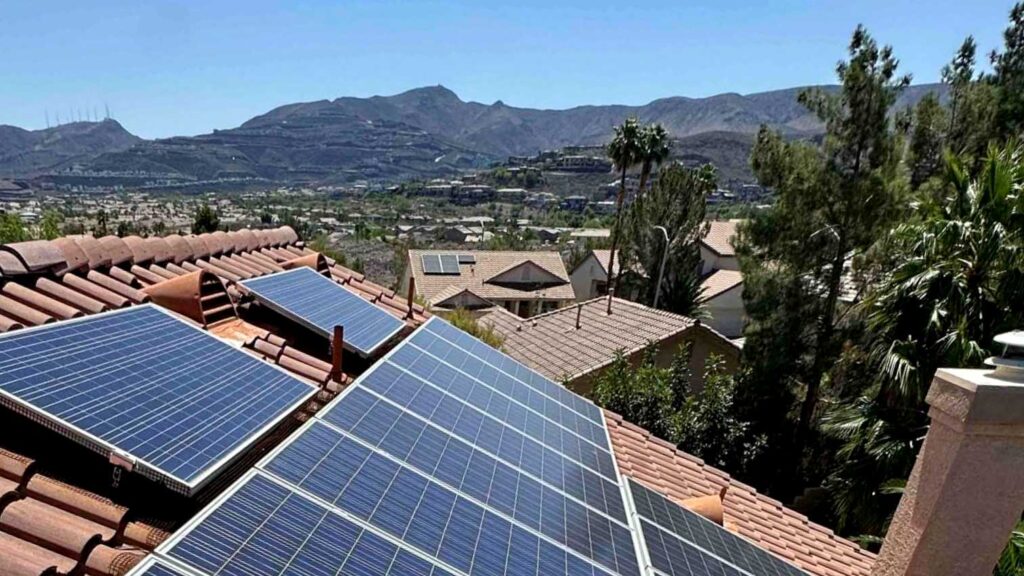
- Wattage: This term means the rated power output of the panel under ideal laboratory conditions. If a panel is 350W, it can produce 350 watts of power when exposed to perfect conditions.
- Energy Production: This measures how much electricity a panel generates over time, expressed in kilowatt-hours (kWh).
- Solar Panel Efficiency: It refers to how well a panel can convert sunlight into electricity.
Manufacturers rate their solar panel’s wattage using Standard Test Conditions (STC), which simulate ideal lab settings.
Standard Test Conditions (STC)
How solar panels are rated in ideal lab settings
Typical Solar Panel Wattage Ranges
Residential Solar Panel Wattage
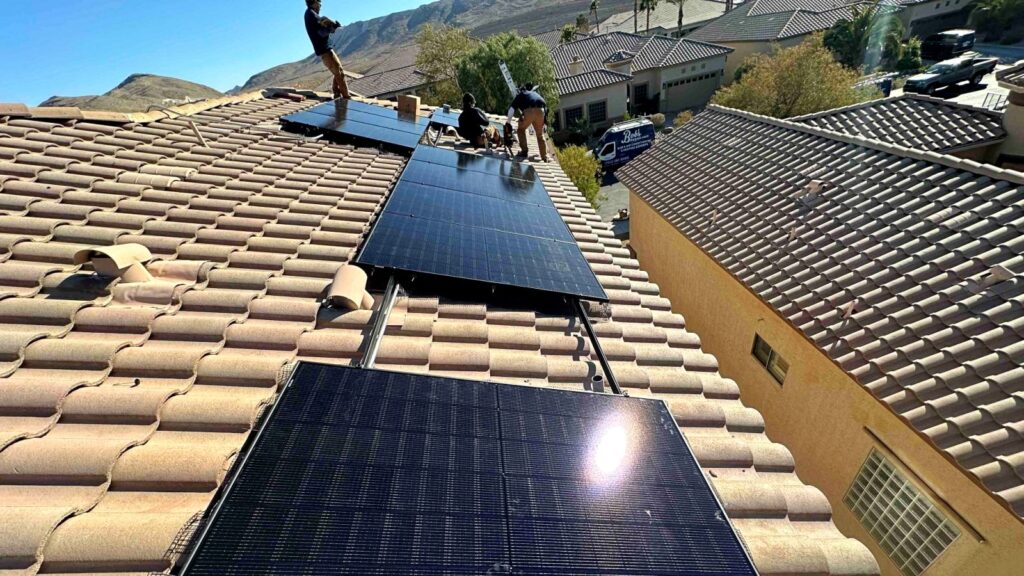
- Most new residential solar panels in Nevada in 2025 are rated between 390W and 460W. The most popular models are around 450W.
- General range: Modern panels for homes generally range from 350W to 460W. Older panels that were installed 5 to 10 years ago are typically rated at 250 to 300W, according to this data.
- High-efficiency models. The most efficient residential panels available for Nevada homes in 2025 can deliver 430-470W. They can also convert 17 to 23% of sunlight into usable energy.
- Smallest panels: Panels rated around 100W are available. However, they’re mostly used for portable or off-grid applications.
Commercial Solar Panels

- Wattage range: Commercial solar panels in Nevada typically range from 450W to 550W. Some utility-scale exceeding 600W, according to this report.
- Cell count: Most commercial panels utilize 72, 96, or 144 half-cut solar cells, compared to the 60 or 72 cells common in residential panels.
- Reason for higher wattage: Larger physical size and more cells allow commercial panels to generate more power per panel.
Average Solar Panel Wattage in Nevada (2025 data)
- Residential average: The average solar panel in Nevada in 2025 for commercial purposes is 400-450W, according to this report.
- Low-end panels: 300-350W
- Mid-range panels: 370 to 420W
- Commercial average: 450-550W. Some panels exceed 600W for utility-scale solar farms.
Factors Influencing Solar Panel Wattage:
Panel Size and Number of Cells:
- Panel Wattage and Size. The wattage is directly related to the size of the panel. If there’s more surface area, there’s more room to collect sunlight.
- Residential panels: As stated in this report, typical residential solar panels in Nevada measure about 65 x 39 inches and utilize 60 or 72 cells. Modern 60-cell panels usually produce 300-350W. The 72-cell panels can reach 350-450W.
- Commercial panels: They typically produce more watts because they can house more solar cells. These panels are around 78×39 inches with 72-98 cells. Newer commercial panels with 144 half-cut cells can produce 550-600W or more.
Cell Technology & Efficiency
-
Monocrystalline Cells
They deliver the highest efficiency ratings among commercial technology. These are common in Nevada homes because of their superior performance in limited roof space.
-
Polycrystalline Cells
They’re the most cost-effective to manufacture. But they have lower efficiency ratings in the 13-16% range. They’re less commonly installed in Nevada’s space and sun-optimized market as stated in this report.
-
Passivated Emitter and Rear Cell (PERC) Technology
It enhances traditional cell designs. PERC cells add a reflective layer on the rear side of the cell. This is especially valuable in the sunny climate of Nevada.
-
Half-Cut Cells
They are split cells that reduce power loss while improving performance.
-
Bifacial Technology
It captures light from front and back surfaces, thereby, increasing solar panel output by 10-20%, depending on installation conditions. In Nevada’s bright environment, these panels can be effective.
Manufacturer and Model
- Premium manufacturers like SunPower, REC, and Maxeon are known for high-efficiency, high-wattage panels. Their advanced manufacturing and quality control make them ideal for space-constrained rooftops in Nevada, thereby, maximizing power per square foot.
- Mainstream brands, such as Qcells, Canadian Solar, and JA Solar provide a balance between cost and performance. They’re also widely available in Nevada.
Why Does Wattage Matter?
System size

Higher wattage panels mean you need fewer panels for the same total output. If you use lower-wattage solar panels, you need to install more panels to generate the same amount of electricity, according to this report.
Overall System Output
Panels with higher wattage generate more electricity per panel. This is especially valuable when combined with high efficiency.
In Las Vegas, there are over 310 sunny days per year. A 400W panel can produce about 1.8 kWh per day.
Higher-wattage panels are valuable if you have a smaller roof. They can help you maximize your energy production from limited space. These panels are a common consideration for urban homes in Nevada.
Cost Implications
Higher-wattage panels often cost more per panel. However, they can reduce overall system costs. With fewer panels to install, you can save on racking, wiring, and labor. Overall, this can make installation faster and less expensive, even if the panels are pricier.
The average cost for a solar installation in Nevada is about $2.17 to $2.19 per watt before incentives. Thus, a 5 kW system can cost roughly $10,900 to $11,000 before tax credits. You may refer to this calculator. Fewer panels can mean lower installation costs, especially for labor and mounting hardware.
How to Determine the Right Wattage for Your Needs?
When determining the right solar panel wattage, you’re not just picking the most powerful or the highest wattage panels. Instead, your system must be tailored to your specific energy needs, available roof space, sunlight exposure in Nevada, and your budget.
Factors to Consider
- Energy consumption (kWh): Review your electric bill to see how much electricity your household uses measured in kilowatt-hours (kWh). In Las Vegas, the average home uses about 12,800 kWh per year, according to this data.
- Available Roof Space: Your roof size and layout will determine how many panels you can install. If you have limited roof space, you may benefit from high-wattage, high-efficiency panels to maximize energy production per square foot.
- Sunlight Hours in Nevada: Las Vegas has an average of 5 to 6 peak sun hours per day. The more sunlight your panels receive, the more electricity they can generate.
- Budget: Higher-wattage panels often cost more per panel. However, they can reduce overall system costs by requiring fewer panels, less racking, and labor costs.
- Shading: Shading from trees, buildings, or debris can significantly reduce output. According to this report, one shaded cell can cut a panel’s power by 50–80%.
- Panel cleanliness: Dust and debris are common in Nevada’s desert climate. They can lower panel output by 5–25% if not cleaned regularly.
- Panel efficiency: Efficiency varies by manufacturer and model. Top panels in 2025 reach over 22% efficiency, meaning more energy from the same area.
Calculation Formula
Experts recommend this simple formula to estimate how many panels you need:
For instance, if you want your system to generate 6,000 watts or 6kW:
Technology Trends
Thanks to advances in cell efficiency, larger wafer sizes, half-cut and bifacial cell designs, and improved manufacturing, wattage has steadily increased over the past decade.
Looking ahead, next-generation technologies, such as perovskite-silicon tandem cells, promise higher efficiencies and wattage. Experts expect residential panels to exceed 500W and utility panels to reach or surpass 800W, according to this report.
Furthermore, researchers at the Fraunhofer Institute have developed a solar cell with a record efficiency of 46.7%. Unfortunately, this technology is not yet commercially available.

