
Installing solar panels in Las Vegas takes more than picking equipment and booking an installation date. Every homeowner in Clark County must secure a solar permit before any work begins, and skipping that step creates serious legal and financial risk. Local building departments regulate solar setups because rooftop systems must handle extreme desert heat, high winds, and high-voltage electrical connections tied directly to the Nevada power grid.
In Clark County, every residential rooftop solar installation requires a permit, no exceptions. What follows covers the Las Vegas solar permit requirements, what the application processes look like, how much permits cost, and why most residents turn to licensed contractors to get it done right.
Las Vegas Solar Permit Requirements: 3 Approvals Before Installation
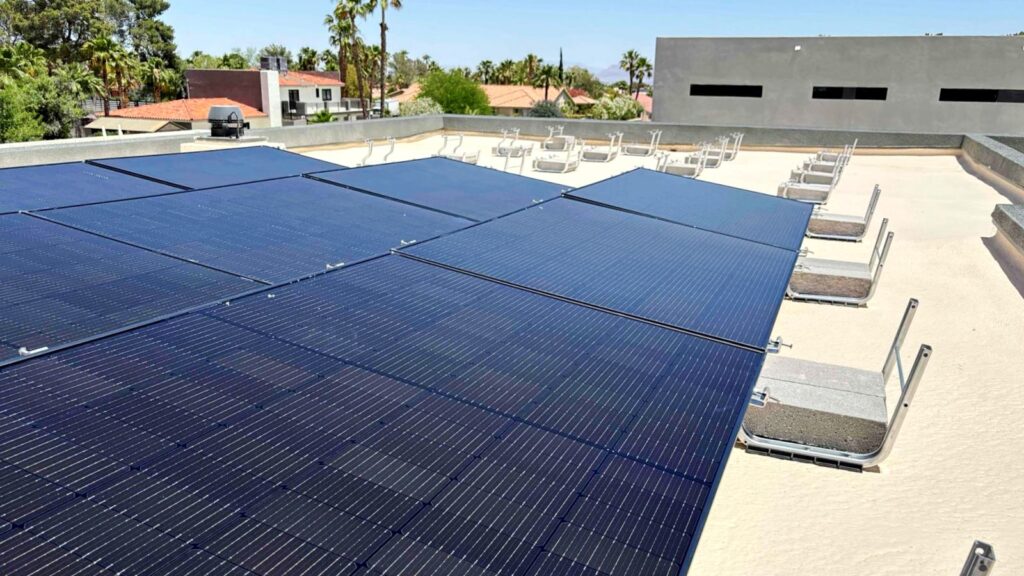
Most residents in Clark County need three separate approvals before a solar system can legally produce power. Each step involves different agencies and timelines, and knowing what to expect upfront prevents costly delays.
HOA Approval
NRS 278.0208 ProtectedHomeowners’ associations often regulate exterior construction, and solar installations are no exception. They can set rules around panel placement, visibility from the street, and required setbacks. What an HOA cannot do is ban solar panels outright, nor can they enforce rules that decrease a system’s efficiency by more than 10%. Nevada law (NRS 278.0208) protects property owners from those kinds of unreasonable restrictions.
Before the project begins, most HOAs request a project description, a roof layout, and the property address. They may also ask to review the installation design to confirm there is no structural impact on neighboring properties or the building itself.
Getting HOA sign-off before submitting a building permit application is standard practice among licensed contractors working in Clark County. Most reviews go smoothly once the system design meets the association’s guidelines.
Building and Electrical Permits in Clark County
Building + Electrical RequiredEvery solar project in the county requires both a building permit and an electrical permit before installation can begin. These documents confirm the system meets structural and safety standards under current codes.
A standard permit application must include a signed permit form, a site plan showing panel layout, structural information for the roof, a one-line electrical diagram, equipment data sheets for inverters and panels, and the contractor’s license number. Clark County reviews all of this during plan review to confirm compliance with the 2024 IRC, IBC, and IECC standards, which officially went into effect on January 11, 2026.
The structural requirements are strict. Roof-mounted projects must generally weigh less than 4 pounds per square foot. Fire codes require not fewer than two 36-inch-wide pathways on separate roof planes (with at least one on the street or driveway side) from the eave to the ridge so firefighters can access the roof safely.
Projects rated at 25 kW AC or higher must have engineer-designed electrical plans. A building permit is mandatory for solar installations across Las Vegas, North Las Vegas, and Boulder City jurisdictions. The system’s kW rating also determines which review track applies and what level of engineering documentation must be submitted.
NV Energy Interconnection and Final Approval
Final Step: PTO RequiredAfter installation passes inspection, NV Energy must approve the setup before it can send electricity to the grid. This step is called NV Energy Permission to Operate, or PTO, and it is the final approval standing between a completed job and an active system.
Without PTO, the panels cannot legally export energy or earn net metering credits. The process involves submitting design documents, paying a small application fee, waiting for utility review, and receiving final activation once all inspections clear.
Same-Day Solar Permits Through the Citizen Access Portal
Many homeowners assume permits take weeks. For standard residential systems, that is not always true. Clark County and the City of Las Vegas offer expedited processing through the online portal when a project meets specific criteria.
The Fast Track
A rooftop solar system qualifies for fast-track approval when it does not include battery storage, a licensed contractor submits the application, standard rooftop mounting is used, and the electrical diagrams meet simplified filing requirements. When those conditions are met, contractors can upload plans and receive same-day permit issuance.
The Slow Track
Projects that fall outside those criteria require a full plan review. This applies to solar batteries and energy storage systems (ESS), owner-builder installations, ground-mounted arrays, and commercial solar projects. Engineering review and revisions can add weeks to the process, and a single missing detail in a structural diagram can push the permit date back significantly.
Clark County Solar Permit Application Process
Applications are submitted through the county’s permitting portal, which manages construction permits across the region. The steps follow a clear sequence.
First, determine the correct permit type for the project. Second, gather all necessary documents. Third, submit the application through the portal and pay the applicable permit fee. Fourth, complete plan review if applicable. Fifth, receive permit issuance and schedule inspections after setup.
Clark County permits are valid for 180 days from the date of issuance. If work does not start within that window, the permit expires, and a new application will be needed. The permit must also be posted visibly at the job site throughout construction.
Solar Permit Costs in Clark County
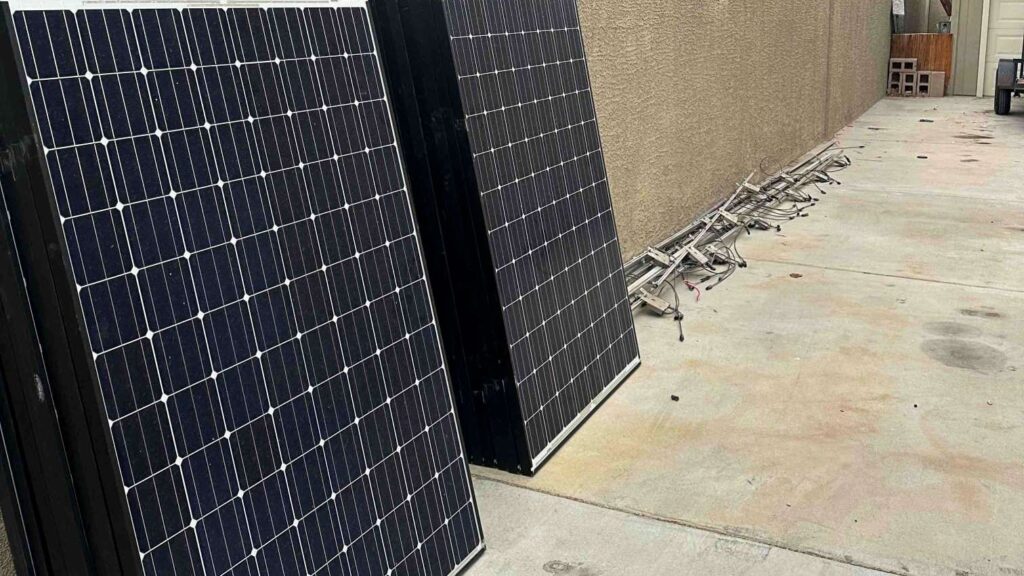

Residential solar permit fees in Clark County typically run between $200 and $400, depending on project size and valuation, though final fees are confirmed by county staff at the time of application. Larger systems cost more to permit, and homeowners can get a preliminary estimate using the Clark County fee calculator before submitting.
NV Energy also charges a separate interconnection application fee set by the Nevada Public Utilities Commission, which is subject to change between rate cases, so confirm the current amount directly with NV Energy before budgeting. Commercial solar projects with greater complexity carry higher review fees.
Why Licensed Contractors Matter for Solar Installations
Nevada law requires contractors to display their license number on all advertisements and contracts. Working with professionals ensures compliance with Nevada building and electrical codes, allows faster permit processing through the online portal, and protects homeowners from liability tied to unlicensed work.
An unlicensed contractor can leave a resident responsible for code violations, failed inspections, or financial losses that are hard to recoup. Licensed solar contractors routinely manage the full permit process, covering HOA paperwork, county submissions, and utility interconnection from start to finish.
The Bob’s Repair Advantage
A typical solar project involves structural plans, electrical diagrams, permit applications, HOA documentation, NV Energy interconnection paperwork, and inspection scheduling. That is a significant amount of paperwork for a homeowner to manage alone.
Bob’s Repair handles every step. Our licensed Nevada contractors submit plans through the Clark County portal, coordinate with inspectors, and confirm all permits are approved before the setup begins. We handle solar installations across Clark County and take care of 100% of the HOA, Clark County, and NV Energy paperwork so homeowners never have to chase approvals.

Don’t let county paperwork delay your energy savings. Contact Bob’s Repair today. Our local experts handle every permit and approval so you can sit back and wait for the power to turn on.

