
If your AC is running around the clock and your living room feels like a pottery kiln in July, your unit probably isn’t broken. Las Vegas heat physically overwhelms air conditioners, and the utility bill is what actually breaks people. Nevada solar installations are the obvious fix; Nevada HOA solar panel approval law makes sure your board can’t block them, and Bob’s Repair has guided Las Vegas homeowners through this exact process from start to finish.
Why Your AC Runs Non-Stop in July
If your AC is struggling to keep your home cool during a brutal Las Vegas heatwave, it’s not failing – it’s hitting a physical limit it was never built to exceed.
Air conditioning engineers design systems to handle the hottest temperatures a city normally sees. For Las Vegas, that range is roughly 106°F to 108°F. Building a unit large enough to effortlessly handle 115°F would actually cause it to turn on and off constantly and struggle to remove humidity on normal summer days.
A standard residential system tops out at a 31 to 33 degree differential. When Las Vegas sustained 115°F for five consecutive days in July 2024, reaching 72°F inside would have required a 43-degree drop. No standard compressor does that.
It’s genuinely disorienting to stand in someone’s home in July, watch the thermostat read 84°F, and explain that the unit is technically working perfectly. It’s just losing a battle it was never designed to win.
The Mojave’s fine sand and UV radiation cut coil efficiency by up to 30 percent and can shorten system lifespans to as few as ten to twelve years. If your system is over 15 years old or constantly breaking down, the right first step is upgrading to a high-efficiency SEER2 cooling unit (the current efficiency rating standard for new AC systems), which cuts baseline electricity consumption by 20 to 40 percent.
The Solar Solution
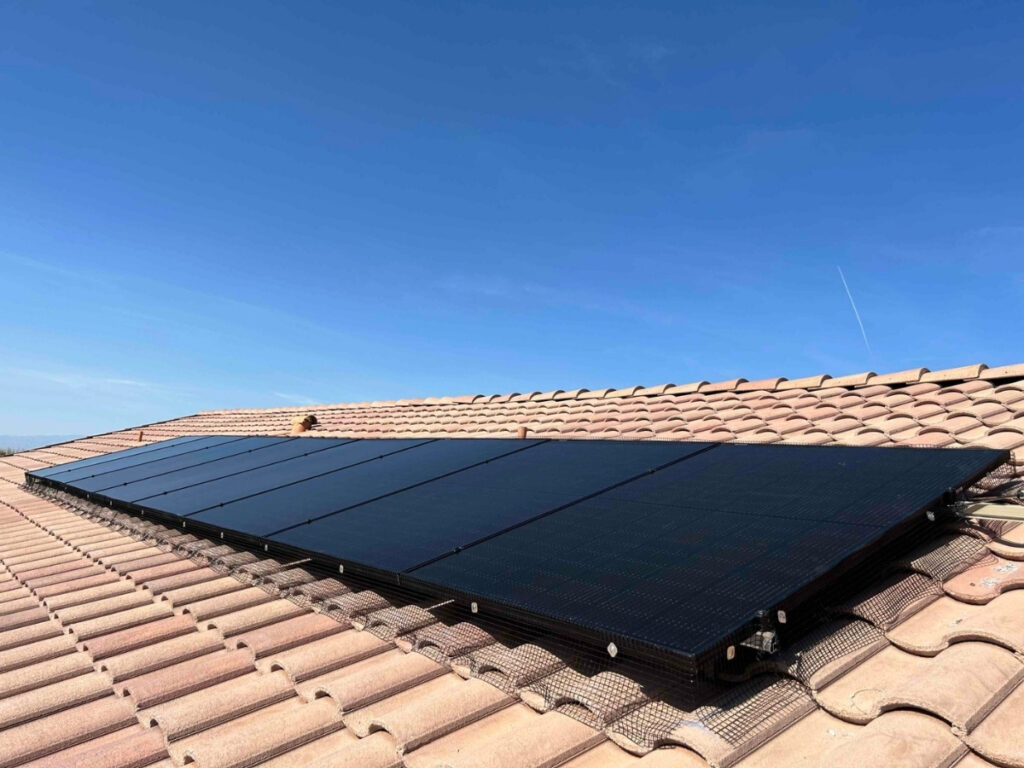
A healthy AC running non-stop through a Las Vegas heatwave can push NV Energy bills past $500 a month, driven by Time of Use rates that apply during the exact hours your solar power system generates its highest output. You’re using the blistering desert sun to power the exact machine fighting the heat, which is why solar panels are the most effective financial defense a Las Vegas homeowner can deploy.
For an average Las Vegas household, a solar energy system of 6 to 7 kilowatts can offset up to 100 percent of annual electricity use, effectively neutralizing your summer bills. Under NV Energy’s net metering programs, excess electricity exported earns a credit at 75 percent of the retail rate, which rolls over month to month. Clark County homeowners can access NV Energy rebate programs, and the federal Residential Clean Energy Credit allows homeowners to subtract 30 percent of the total solar energy system cost directly from the amount of federal income tax they owe, making Nevada solar more affordable.
Nevada Solar Laws Explained: HOA Rules and Your Rights
Many homeowners in communities like Summerlin, Cadence, and Sun City Anthem assume their HOA’s Architectural Review Committee can block a rooftop solar installation. That assumption is incorrect.
Under NRS 111.239 and NRS 278.0208, any covenant, deed restriction, or rule by homeowners’ associations that prohibits or places unreasonable restrictions on a property owner’s solar access is legally void and unenforceable. State law exists to protect these HOA solar rights. NRS 111.239(3)(b) and NRS 278.0208(3)(b) add that prohibiting a solar energy system because it uses black solar glazing components is also unreasonable. Nevada homeowners can also receive solar easements from neighbors to prevent future shading from trees or new structures.
The 10% Performance Rule
HOAs can impose reasonable restrictions on placement and visibility. Under NRS 278.0208(3)(a), a restriction is unreasonable if it decreases efficiency by more than 10 percent of the original design, making any such demand void and unenforceable.
Homeowners who believe an HOA demand crosses this line can escalate formally to the Nevada Governor’s Office of Energy under NRS 701.180(6).
Senate Bill 440 and HOA Response Timelines Under Nevada Law
HOA boards historically stalled solar projects using delay tactics rather than outright legal bans. Senate Bill 440, enforceable from October 1, 2025, eliminated that approach entirely.
| Situation | Required Response Window |
|---|---|
| HOA has a written solar policy | 35 calendar days from the completed solar request |
| HOA has no established solar rules | 15 calendar days from the completed solar request |
| HOA misses the deadline | Application is automatically approved |
Any denial must include specific written reasons. HOAs that ignore a solar request risk lawsuits, fines, and court orders requiring the association to rewrite its governing documents.
Escalation Pathway: Nevada’s Governor’s Office of Energy
When an HOA denial or placement demand violates the 10 percent threshold, litigation isn’t required. The homeowner submits a formal request to the Governor’s Office of Energy with the association’s denial letter, contractor schematics of both the originally proposed and the HOA-demanded system configurations, and the specific azimuth and tilt angles of the demanded placement. The office uses PVWatts and HelioScope modeling to verify energy loss and must respond within 30 days. If the calculated efficiency loss exceeds 10 percent, the restriction is void.
Installing Rooftop Solar in Nevada
Nevada homeowners need both a building permit and an electrical permit before installation work starts. Solar permits must be submitted to local government agencies and must satisfy local building codes and safety regulations.
Many homeowners don’t realize they cannot activate their solar system until NV Energy grants Permission to Operate (PTO). A completed installation can sit idle for weeks if interconnection isn’t handled correctly, and NV Energy charges a $189 review fee for residential applications in Southern Nevada. Knowing what the solar interconnection process involves before signing a contract prevents delays unrelated to the physical installation.
How We Handle the HOA Approval Process For You
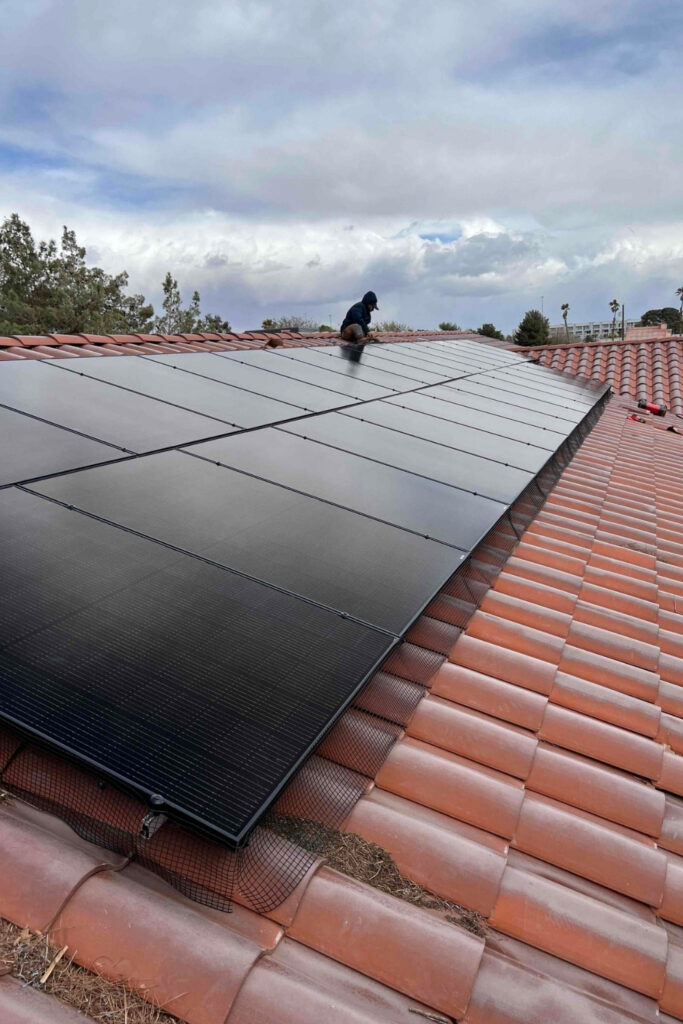
Most solar companies say they handle the HOA without explaining what they’re submitting or why it holds up legally.
Bob’s Repair builds every solar project application with three-dimensional roof layouts, HelioScope shading analyses, and NREL PVWatts production estimates, confirming that any relocation demand would exceed the 10 percent rule. This is the exact process needed to force rapid HOA approvals: Step 1 is ARC submission with the full engineering package, Step 2 is city and county permits, and Step 3 is NV Energy interconnection.
From ARC submission and local permit coordination, through the full NV Energy interconnection application, to final Permission to Operate, Bob’s Repair manages every step. Bob’s Repair is NATE-certified, offers same-day consultations, and backs every installation with a 5-year labor and 10-year parts warranty. The homeowner waits for panels, not paperwork.
“Nick was great. Answered all my questions and helped me understand my solar system better. He was able to spot some issues on the spot to direct me where to go to resolve my problems. (Unfortunately, I have to deal with the installer). Regardless, I have the info to do so more effectively. Thanks, Nick. Wish I’d known about Bob’s HVAC & Solar sooner! I may get my current system replaced and their 5 star reputation precedes them so I will call them!”
Don’t let the heat drain your bank account, and don’t let your HOA intimidate you. Whether you need an AC replacement or a custom solar panel system with guaranteed HOA approval documentation, Bob’s Repair is your local expert. Contact us for a free energy assessment today.

