
From Watts (Power) to Kilowatt-Hours (Energy)
A panel’s wattage is different from its output (kWh). Think of it this way:
- A car’s horsepower (a panel’s wattage) tells you its potential for speed.
- However, how many miles it actually drives (kilowatt hours or kWh) depends on where and how you drive it.
To truly understand your solar panel output and estimate your energy production, it’s vital to know the difference between power (watts) and energy (kilowatt-hours).
- A solar panel’s wattage is the instantaneous power rating.
- It’s typically measured under laboratory conditions known as Standard Test Conditions (STC).
The actual energy production, or the kilowatt-hours of electricity it generates over time, depends on several factors.
To understand the starting number, see our Solar Wattage Guide.
Solar Panel Efficiency: More Than Just Watts
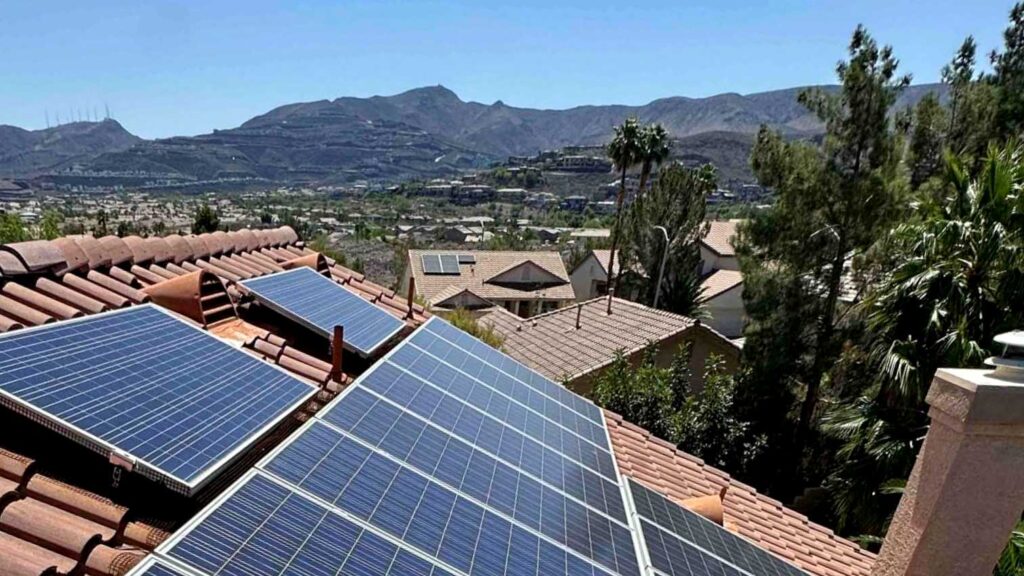
Solar panel efficiency measures the percentage of sunlight that’s converted into usable electricity. This efficiency rating affects a panel’s power output and overall solar energy production.
- For example, monocrystalline panels generally have higher efficiency ratings than polycrystalline solar panels, according to the comprehensive analysis of Solar Panel Performance.
- With that in mind, they’ve become a popular choice for residential solar installations.
Having a better understanding of solar panel efficiency is crucial for estimating energy production and determining the number of panels needed. Keep in mind that solar panel efficiency ratings can vary between manufacturers and models.
The 3 Key Factors for Calculating Real-World Solar Panel Output
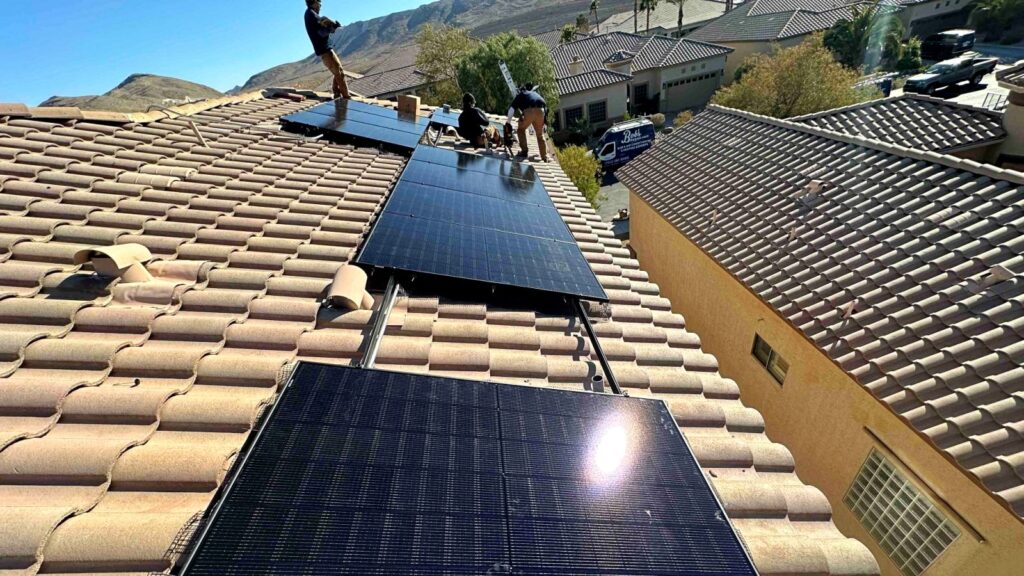
Calculating solar panel output involves estimating the amount of electricity a panel can produce based on its characteristics and environmental factors. Solar panel output calculations are complex. However, here’s a simple version to help you determine how many solar panels you need:
1. Panel Wattage Rating = Power
This is the rated power output of your solar panel. It’s expressed in watts (W). Most residential solar panels have a wattage rating between 250 and 400 watts, according to Environment Nevada Research & Policy Center’s report.
The power rating here is determined under ideal laboratory conditions (STC). It gives you a baseline of how much power a solar panel can produce.
2. Peak Sun Hours
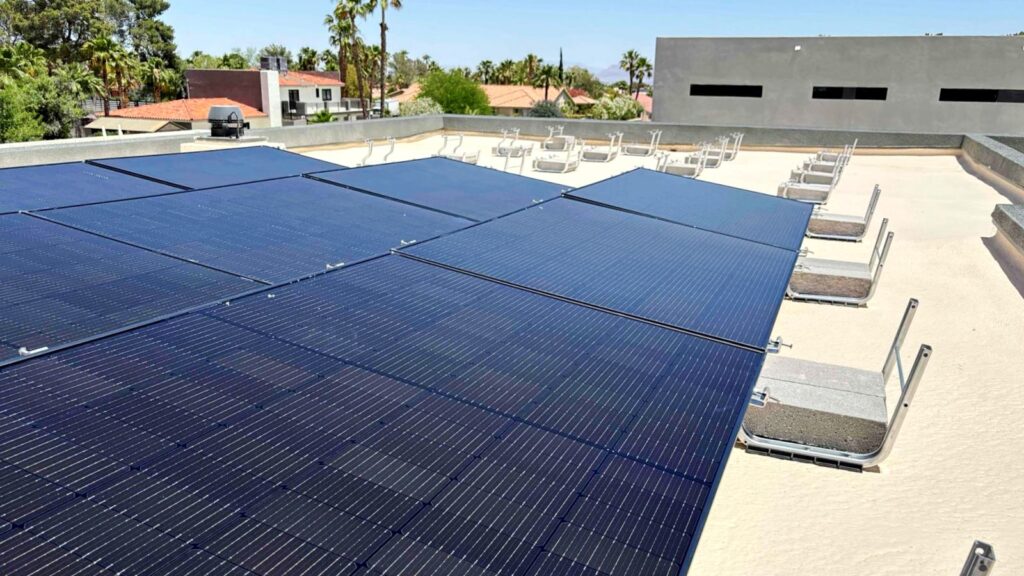
It’s not just the total hours of daylight. Rather, it’s also about peak sun hours or the daily average number of hours during which the sun’s intensity is at its most productive peak (around 1,000 watts per square meter).
In Las Vegas, Nevada, you’ll experience a higher average of peak sun hours compared to many other regions, which is a significant advantage for solar power. This direct sunlight is vital for solar panels to generate electricity.
3. The Derate Factor
The derate factor is a crucial number that accounts for real-world power losses that occur outside of perfect laboratory conditions. These losses can come from:
- Heat: Solar panels become less efficient as they get hotter.
- Dust and Debris: Accumulation on the panel surface can block direct sunlight. Solar panels should be installed on unshaded roofs and cleared of debris to maximize solar production.
- Wiring Losses: Some energy is lost as electricity travels through wires as explained by Stanford University.
- Inverter Efficiency: The inverter converts DC electricity from the panels into AC electricity for your home, and there’s a small efficiency loss here.
- Shading: Even partial shading from trees or other structures can seriously reduce panel output.
Typically, the derate factor ranges from 0.75 to 0.85 (Handbook for Rooftop Solar Development in Asia). For a good, practical estimate, we often use around 0.8 or 80%.
The Simple Formula and a Real-World Example
Panel Choice: Common 400-watt panel from Bob’s Repair
Las Vegas Peak Sun Hours: 5.5 hours per day (average throughout the year, thanks to abundant direct sunlight)
Derate Factor: 0.8 or 80% for real-world conditions
Solar calculations use kilowatts, so we need to convert:
Calculate the ideal output before losses:
Account for real-world conditions and system losses:
Most homes install around 18 solar panels. Using our single panel calculation:
Solar Panel System: What Makes Your Daily Output Vary?
Our formula provides an excellent, accurate estimate of how many panels you need. However, the actual energy production from your solar panels can vary depending on numerous factors, all of which are part of the larger picture of how a home solar system works on a daily basis:
- Weather Conditions: Cloudy days will naturally lead to less electricity production than sunny days.
- Season: The sun’s path changes throughout the year. It means peak sun hours will be higher in summer and lower in winter, impacting energy production.
- Shading: Even minor shading from nearby trees, chimneys or other structures on your roof space can reduce panel output significantly.
- Temperature: Solar panels need sunlight. It’s true. However, the World Economic Forum explains that extreme heat can slightly reduce their efficiency.
- Degradation: As solar panels age, they lose a bit of their ability to generate power, thereby degrading at a rate of about 0.5% per year. This solar panel degradation is accounted for in their lifespan which can range from 25 to 30 years.
Maximize Your Solar Investment: Sustainable Energy
Calculating solar panel output and solar panel production provides a great framework for understanding the potential for solar power and how much electrical energy it can produce. However, this guide gives you a solid, rough estimate.
It’s just an estimate. Getting a precise understanding of your potential solar energy production and the ideal solar system size for your home in Las Vegas, Nevada, requires a professional assessment.
About Bob’s Repair Services

At Bob’s Repair, we specialize in expert solar installation and planning, as well as solar panel repair services, to ensure you know how much energy comes from the panels, depending on the available roof space for maximum efficiency. Our qualified professionals can provide a precise calculation of output and system size tailored to your specific roof space, energy consumption, and unique conditions.
We ensure proper solar panel orientation and angle for maximum power output and longevity, considering local climate and building codes. We also emphasize solar panel maintenance and cleaning to ensure optimal solar panel performance.

