
You’ve likely seen the term “24V solar panel” advertised online, especially if you’re researching an alternative energy solution. But what does this voltage rating mean? And are these panels the right choice for powering your home?
The truth is, 24V solar panels are excellent tools—but they are designed for specific off-grid applications, not typically for the grid system that powers a modern home. This guide clarifies the role of 24-volt solar panels and explains the fundamental differences between DIY, battery-based systems, and professional residential installations.
Decoding Solar Panel Voltage: 12V vs. 24V
Solar panels come in different voltage ratings that determine their electrical output and ideal applications. A 24V solar panel is designed to work efficiently within a 24-volt electrical system—typically to charge a 24V battery bank. These panels are often used in off-grid solar setups where durability and efficiency matter most.
What Are 24V Solar Panels Used For?
Historically, solar panels were classified by the nominal battery voltage they were designed to charge. The primary use cases for 24V solar panels today are:
Ideal for powering cabins, workshops, or larger RVs where energy storage is essential. They form a reliable part of a complete solar array that keeps your lights and appliances running smoothly.
Popular among hobbyists who connect solar panels for small-scale or portable solar systems. Their higher voltage allows for more efficient power transmission over longer distances to the charge controller.
Commonly used to run security lights, telecom gear, and monitoring devices that rely on a 24V DC circuit for steady operation.
Are 24V Solar Panels Better Than 12V?
For battery charging, 24V solar panels are generally more efficient than 12V solar panels when scaling up. Higher voltage systems (like 24V) draw less current (amps) to produce the same watts of power. This means you can often use thinner wires and experience less energy loss, resulting in faster charging and greater overall efficiency in a medium-scale off-grid system.
Why 24V Panels Are NOT Typically Used for Grid-Tied Home Solar
This is the crucial distinction for homeowners. If you are looking to install solar panels on your roof to connect to the utility grid, you will not be using 24V solar panels. Here’s why most modern grid-tied systems use higher voltages for better power output and long-term efficiency.
Modern Grid-Tied Systems Use Higher Voltages
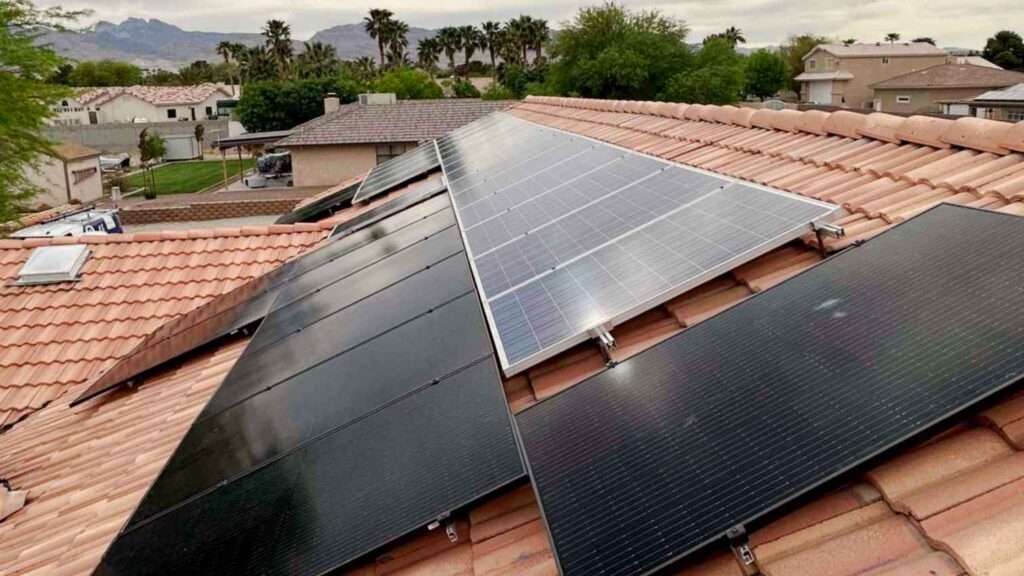
Professional residential installations—like those by Bob’s Repair—use solar panels with much higher voltage ratings, typically between 30 and 50 volts per panel. These solar cells are designed for homes that need to generate enough power from available sunlight, not for off-grid or camping setups. While 24V panels are common in cabins or portable systems, they can’t deliver the same capacity or connectivity that a full-size home requires.
System Design Differences
In grid-tied solar systems, multiple panels are connected in series, or “strings,” to raise the total DC voltage to about 300–600VDC before reaching the inverter. This design minimizes energy loss when transporting power from the roof to your home.
A parallel connection, often used in smaller off-grid systems, simply can’t achieve this efficiency. Modern panels are built with tempered glass and durable framing to handle sun exposure and weather while maintaining consistent watts and power output over their life span.
Inverter Compatibility
Grid-tied inverters are engineered to handle high-voltage DC input and convert it into AC power for your home and the utility grid.
They’re not compatible with the low voltage of a single 24V solar panel. To function properly, the inverter needs the cumulative voltage from multiple panels in series.
Key Components of a 24V Solar Power System
While not ideal for grid-tie, the 24V solar panel is a solid foundation for a dedicated off-grid application. Here are the other essential components you need to make it work:
| Component | Function in a 24V System |
| Solar Panels (e.g., 200-watt 24V panels) | Converts sunlight into DC power. Typically feature tempered glass and a double-walled aluminum frame for durability. |
| Charge Controller | Protects the battery bank from overcharging and manages the flow of power. An MPPT type is best for maximizing the maximum power output of a panel. |
| Battery Bank | Stores the generated energy for later use. Must be a 24V bank (connected to achieve 24V total capacity). |
| Inverter | Converts the 24V DC battery power into 120V AC household power to run your load (appliances, lights, and so on). |
| Mounting Hardware | Includes Z-brackets or adjustable legs for easy installation on RVs, cabins, or mobile system setups. |
Whether you are looking for a reliable grid-tied solar power system in Anthem, NV, a professional installation in Paradise, NV, or a custom energy solution for your home in Southern Highlands, NV, Bob’s Repair is your trusted local provider for high-quality, high-efficiency solar.
Connecting Solar Panels: Series vs. Parallel
When working with 24V solar panels, understanding panel connections is vital:
- Series Connection: A series setup connects the positive terminal of one panel to the negative terminal of the next. This increases total system voltage while keeping the current the same. It’s the method used in professional residential solar systems to achieve high-voltage power output before reaching the inverter.
- Parallel Connection: A parallel configuration connects all positive terminals together and all negative terminals together. This boosts the total current (amps) while keeping the voltage at 24V. It’s often used in off-grid solar panel setups—like those powering a cabin, RV, or camping system—to expand load capacity and increase total watts without changing the battery’s voltage.
The Takeaway: Different Tools for Different Jobs
For smaller off-grid systems—whether for a portable cabin, RV, or remote site—a 24V solar panel with a compatible charge controller and battery bank is a practical and efficient choice. It offers an ideal balance of power output, wiring simplicity, and cost-effectiveness.
However, for powering your entire home, connecting to the grid, and maximizing long-term efficiency and safety, you need a professionally designed, high-voltage on-grid system using panels specifically designed for that purpose. These systems allow for net metering and deliver far more power than any low-voltage system could.
If you’re ready to explore high-efficiency solar panels and accessories for your home, including advanced options like solar siding and modular solar panels, the team at Bob’s Repair is here to help. We can walk you through the specifics of how a residential solar panel diagram applies to your home and design a reliable system with the right panels and inverter for your needs.
Ready to find the right high-efficiency solar solution for your home? Contact Bob’s Repair for a free consultation on a professional, grid-tied system designed for your specific energy needs.

